logo

From Powder Handling to Granule Drying: Trends of Fluidized Bed Equipment Across Southeast Asian Industries

December 30, 2015

最新の会社ニュース From Powder Handling to Granule Drying: Trends of Fluidized Bed Equipment Across Southeast Asian Industries

1. Industry Background: Increasing Demand for Controlled Drying Processes


In Southeast Asia, industries such as pharmaceuticals, food processing, and fine chemicals are shifting toward multi-product and standardized production. Under this trend, drying of powders and granules has become a critical step affecting product consistency.

Traditional drying systems often face challenges such as uneven drying, localized overheating, and dust leakage, especially under GMP or controlled environments. This has driven the adoption of technologies capable of maintaining stable and controlled drying conditions.


2. Key Challenges in Powder and Granule Drying


2.1 Uneven Drying Performance


Non-uniform airflow distribution can create dead zones, leading to inconsistent moisture content in granules.


2.2 Dust Leakage and Contamination Risks


Insufficient sealing in conventional systems may cause powder escape and increase cross-contamination risks.


2.3 Agglomeration of Wet Materials


Poor material movement during drying can result in particle agglomeration, affecting final product quality.


2.4 Scale-Up Consistency Issues


Differences in airflow and heat transfer during scale-up may lead to unstable batch performance.


3. Technical Approach: Fluidized Bed Drying Mechanism


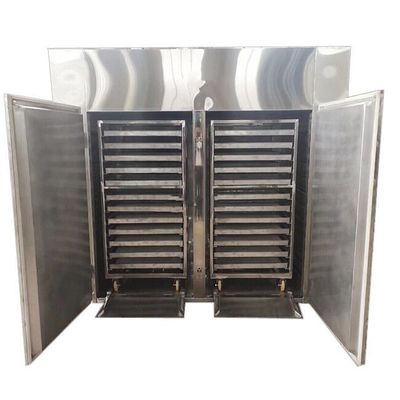
Fluidized bed dryers create a stable fluidization state by introducing heated air from the bottom, enabling efficient heat and mass transfer.

Key Engineering Features


These features support stable drying performance across various materials.


4. Typical Applications in Southeast Asia


4.1 Pharmaceutical Industry


Used for drying wet granules before tableting, ensuring consistent moisture levels.


4.2 Food Industry


Applied in drying additives and functional powders where temperature control is critical.


4.3 Chemical Industry


Suitable for fine powders and crystalline materials requiring uniform drying conditions.


5. Selection Guide: Matching Equipment to Process Needs


5.1 Airflow and Pressure Range


Air volume (approx. 2361–15000 m³/h) and pressure (approx. 533–1200 mmH₂O) determine fluidization stability.


5.2 Batch Capacity


A range of 60–1000 kg per batch supports scale-up from pilot to production.


5.3 Drying Time Control


A controllable drying window (15–30 minutes) helps standardize production.


5.4 Sealing and Filtration System


Critical for meeting GMP and contamination control requirements.


6. Conclusion: From Equipment to Process Integration


As Southeast Asian industries move toward higher standards, drying equipment is increasingly viewed as a key process node rather than standalone machinery.


Fluidized bed dryers, with their advantages in airflow control, heat transfer efficiency, and system sealing, are becoming a preferred solution across multiple industries. Proper parameter matching with actual operating conditions remains essential for achieving stable production outcomes.

最新の会社ニュース From Powder Handling to Granule Drying: Trends of Fluidized Bed Equipment Across Southeast Asian Industries  0最新の会社ニュース From Powder Handling to Granule Drying: Trends of Fluidized Bed Equipment Across Southeast Asian Industries  1


私達と連絡を取ってください
コンタクトパーソン : Mrs. Maize
電話番号 : +86 13861842102
残りの文字数(20/3000)